Governor Newsom proclaimed a statewide state of emergency on September 21, 2026 to prepare California for the 2026-27 El Niño season, which federal forecasters say has better than 90% odds of becoming very strong. The proclamation mobilizes state resources and speeds up permitting for flood, landslide and debris flow preparation, ahead of any storm actually arriving. For anyone maintaining rental homes in California, this is the signal to get ahead of winter rather than wait for the first storm warning.
County officials in Los Angeles have said a wetter than average winter is the clearest signal, with the heaviest impacts likely from December through March. Coastal areas and Southern California are expected to feel El Niño's effects more than inland and northern parts of the state. The Governor's proclamation also notes that California has already seen coastal flooding this year tied to El Niño driven sea level rise.
Why burn scars raise the stakes
The state's greatest concern this winter is the interaction between heavy rain and recent wildfire burn scars. Burned soil often becomes hydrophobic, meaning it sheds rainfall rather than absorbing it, so a storm that would cause routine street flooding on normal ground can trigger a fast moving debris flow on a burn scar. The National Weather Service says burn areas carry a heightened risk of flash flooding and debris flows for at least two years after a fire, which puts recent burn scars squarely in their highest risk window this winter. Properties below or near a burn scar, or on a steep slope, deserve extra attention regardless of how far the storm track sits from them.
A maintenance checklist before the rain arrives
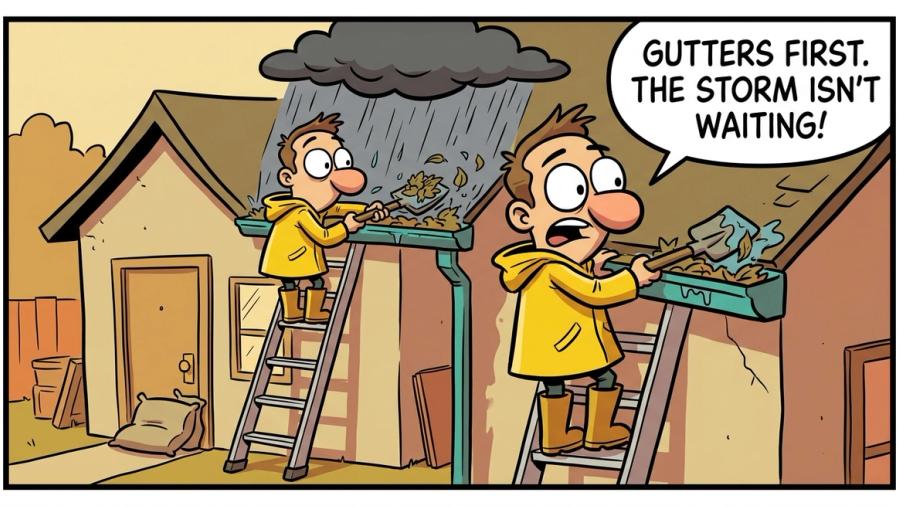
Start outside. Clear gutters and downspouts completely, and confirm downspouts discharge well away from the foundation rather than pooling against it. Walk the roof line for lifted shingles, damaged flashing and any spot where water could get under the surface. Check that storm drains, catch basins and any drainage swale on the property are clear of leaves and debris, since a blocked drain turns a normal storm into standing water fast.
Inspect the grading around the building to confirm water moves away from the structure, and look at retaining walls, slopes and any area with exposed soil for early signs of erosion. If a property sits below a hillside or near a recent burn scar, sandbags or other flood barriers are worth having on hand before the season gets going, not after a storm warning is issued.
Inside, check that sump pumps work, test them if the property has one, and look at crawl spaces and basements for existing moisture that a heavy storm would make worse. Confirm that windows, doors and any vulnerable seals are in good condition, since wind driven rain finds gaps that a dry season never exposed.
Coordination matters as much as the checklist
The properties that come through a wet winter cleanly are usually the ones where someone already knows which units sit near a burn scar or a slope, has a roofer and a drainage contractor lined up, and has dated photos of each property's condition before the rain starts. Waiting until a storm is in the forecast means competing with every other property owner for the same limited crews.
The state is preparing months ahead of the first major storm. Rental property maintenance should follow the same timeline.