Since January 1, 2026, California rentals have been required to come with a working stove and refrigerator under Assembly Bill 628. The law adds both appliances to the list of features that make a rental legally habitable, and it applies to leases entered into, amended or extended on or after that date. That means it phases in unit by unit as leases turn over. For anyone maintaining rentals, from Ventura County to the Sacramento region and everywhere else in the state, an appliance is no longer an optional extra.
California law previously required plumbing, heat and certain other utilities, but not kitchen appliances. Under the change to Civil Code section 1941.1, the stove must be maintained in good working order and be capable of safely generating heat for cooking, and the refrigerator must be in good working order and capable of safely storing food. A stove or refrigerator that is subject to a recall by the manufacturer or a public agency must be repaired or replaced, and the timeline is 30 days after the landlord receives notice. Housing with communal kitchens, single room occupancy units and hotels falls outside the requirement. Enforcement is handled by local governments.
Make appliance checks part of every turn
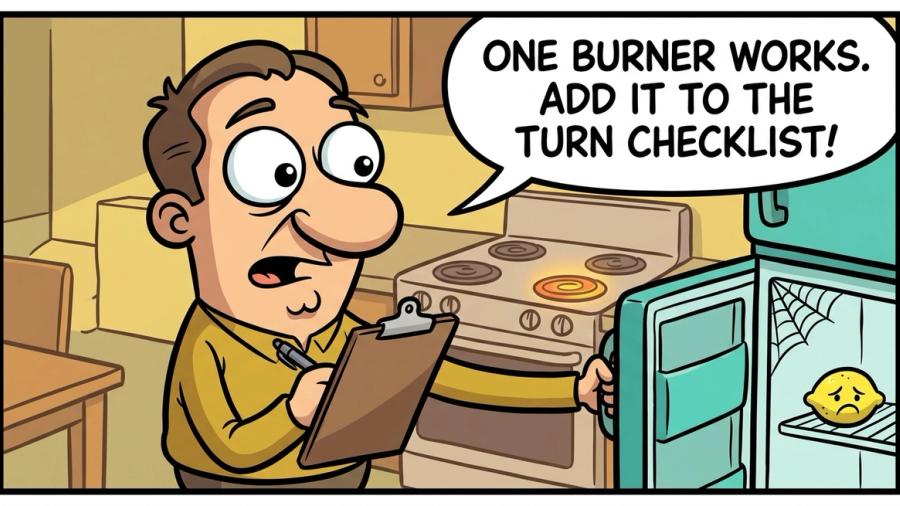
The simplest way to stay ahead of the law is to check the kitchen at every move out and lease renewal. Test every burner and the oven, confirm the refrigerator is cooling and that the door seals closed properly, and look for visible damage, rust or ignition problems that could affect safe use. Because both appliances now fall under the habitability standard, it is better to catch a weak one at a turn than to answer an urgent call mid tenancy.
Record the make, model and serial number of both appliances and keep them in a central list. Recall notices are issued by manufacturers and public agencies, and the 30 day clock only works if someone can match a notice to the appliances in a specific unit within a day or two.
An appliance near the end of its life may still pass a quick check, but replacing it during a turn, when the unit is empty, is usually simpler than replacing it mid tenancy.
Documentation and vendor coordination
A tenant may voluntarily supply their own refrigerator, but a written notice is required in that case, and the California Apartment Association has published a Refrigerator Request Addendum for it. Dated photos of both appliances at move in and move out give everyone the same record of condition if there is a dispute later.
Vendor coordination is the other half. A repair or replacement means scheduling an appliance technician or a delivery crew, arranging haul away of the old unit, and confirming that the new one works. Having a repair vendor and a delivery vendor identified in advance keeps those steps from eating up the time the law allows, especially when several units turn in the same month.
The requirement has been in place for months, but it reaches each unit only when its lease turns, so appliance checks belong on every turn checklist.