California's Board of Forestry and Fire Protection voted 8-0 on August 19, 2026 to adopt "Zone 0" regulations, which create an ember resistant zone within five feet of qualifying buildings. The rules are not in force yet. The Board submitted them to the Office of Administrative Law on August 28, then withdrew the package from that review. The withdrawal is described as procedural, but no resubmission date has been given. For anyone maintaining homes in fire prone areas, including parts of the City of Ventura, the practical move is to start the low cost work now.
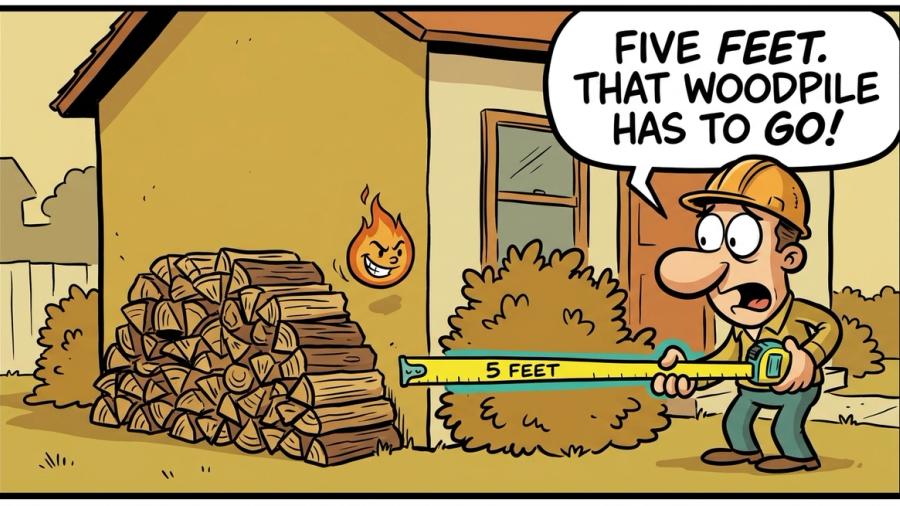
The rules would apply to properties in State Responsibility Areas and in Very High Fire Hazard Severity Zones within local jurisdictions, an estimated 2 million homes. Zone 0 generally extends five feet from a building's exterior walls, roof, attached decks, stairs and pergolas. Some local governments are already ahead of the state: the City of San Diego has applied Zone 0 requirements to new structures in Very High zones since February 2026. The City of Ventura's own guidance notes that portions of the city sit inside the High and Very High zones.
Why the first five feet matter
Wind driven embers can land next to a house and ignite mulch, leaves, firewood, plants and fencing, and flames can then spread to the structure itself. Research has found that keeping an ember resistant area around a home can significantly improve its chances of surviving a wildfire.
Maintenance to start now
Rake and remove leaf litter and dead needles from within five feet of the building, including the area under attached decks and stair landings. Clear roofs and gutters, since debris there is easy fuel for embers. Move firewood stacks, storage bins and other combustible items away from the walls. Remove mulch and dead plant material along the foundation, prune dead or dying branches, and look at where fences and gates connect to the house, since a combustible fence that touches the wall can carry fire to the structure.
The soil line matters too. A gap of about six inches between the ground and the start of the siding makes the zone more effective, so check that soil and mulch have not built up against the wall.
Some of these tasks are already required under existing rules, such as clearing roofs and gutters, keeping firewood out of the zone and removing dead or dying branches, and those apply once the regulations take effect. Other combustible material, vegetation, fencing and outbuilding requirements are phased in over three to five years. With the final text still subject to edits, it makes sense to hold off on costly changes, such as replacing fences or removing large plantings, until it is filed. Cleaning and clearing carry no such risk. It also helps to check each property in the state's Fire Hazard Severity Zone viewer, since local rules can be stricter.
For anyone responsible for several properties, the challenge is scheduling, since fire season work tends to bunch up once a deadline is announced. A first pass now, with dated before and after photos of each property, spreads out that demand and leaves a clear record.
The rule is not law yet, but the risk it targets does not wait for the paperwork, and the first five feet around a building is the cheapest place to reduce it.