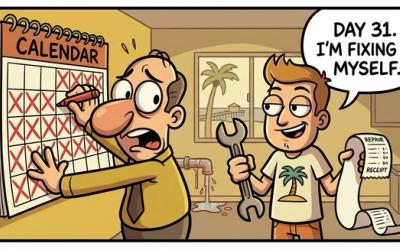
Rental property turnover typically takes 30 to 45 days for single-family homes, while multifamily units average around 41 days nationally, according to 2025-2026 market data. That range covers the full window from a tenant's move-out to a new tenant's move-in, not just the physical repair work, which is usually only a few days of that total.
The physical make-ready itself, cleaning, repairs, paint touch-ups, appliance checks, generally takes 3 to 5 days when it's coordinated well. The rest of the 30-to-45-day window is leasing time: photos, listing, showings, screening, and paperwork. That split matters, because it means most of the days an owner loses to vacancy aren't a maintenance problem, they're a scheduling and coordination problem.
What Actually Drains Days From a Turnover
Turnovers slow down at predictable points: waiting on a vendor's availability, waiting on an owner's repair approval, or starting the make-ready only after the keys are physically handed back instead of the moment notice is given. Single-family homes tend to run longer than multifamily units specifically because the make-ready scope is heavier, a full house of repairs and repaint rather than a single unit refresh, and there's usually only one crew working the property instead of an on-site maintenance team already on the grounds.
Tenant turnover has become landlords' top operational challenge in 2026, ahead of maintenance costs and pricing, according to industry surveys, and the properties losing the most rent to it are almost always the ones without a repeatable process for what happens the day notice comes in.
How a Faster Turnover Process Actually Works
The fastest turnovers start the process at notice, not at move-out. That means scheduling the inspection, lining up vendors, and starting the listing prep before the unit is even empty, so the make-ready begins the moment the old tenant hands back the keys instead of days later. This is the core of what Nest Nomads runs for occupied rental homes, one coordinated turnover process instead of an owner assembling a cleaner, a handyman, and a photographer separately for every vacancy.
Every day shaved off a turnover is a day of rent an owner doesn't lose. A property that turns in three weeks instead of six isn't lucky, it's running a tighter process, and that gap compounds fast across a portfolio of more than a couple of units. Owners who measure their own average turnover time against these benchmarks usually find the biggest opportunity isn't the repair work at all, it's the days spent waiting between each step. Tracking days vacant on every turn, and comparing it against the 30-to-45-day benchmark, is the simplest way to see whether a portfolio's process needs fixing before the next vacancy hits, rather than finding out after the rent has already gone unpaid for another month.