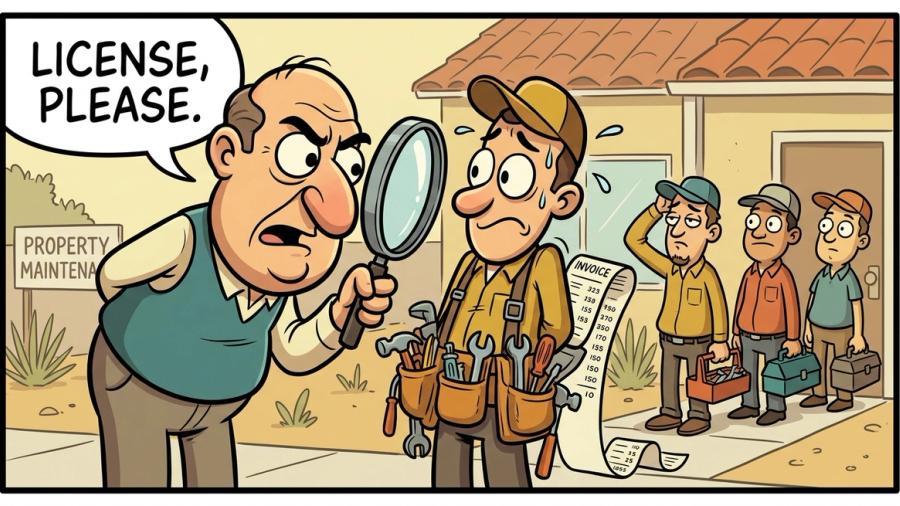
In California, an unlicensed handyman can legally take on a job only if the total price is under $1,000, no building permit is needed and nobody else is hired to help. That rule is the first thing to understand when choosing a property maintenance company in California, because plenty of providers advertise handyman services without explaining where their limits are. Anything outside that box needs a licensed contractor. That's not a technicality.
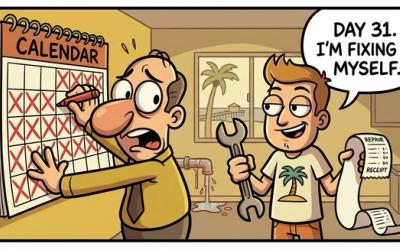
The stakes run both ways. Unlicensed contracting can bring administrative fines of up to $15,000, and repeat offenders can face jail time. Meanwhile, the clock on the landlord's side keeps running: tenants can repair and deduct, up to one month's rent, once a reasonable time has passed after notice, and the law presumes 30 days is reasonable. A maintenance company that's slow or unqualified creates risk on both fronts.
What to Check Before Hiring a Property Maintenance Company in California
Start with licensing. The state's contractor board lets anyone look up a license online, including its classification and status, so check that whoever does electrical, plumbing, HVAC or roofing work actually holds the right one. Then ask how the company handles jobs that cross the $1,000 line or need a permit. A clear answer means they've thought about it. A vague one usually means they haven't.
Next, look at response and coverage. Ask what happens when a tenant reports a leak at 9pm on a Friday, and who picks up the phone. Ask which cities they actually cover, not which ones are listed on the website. Ask how work orders are tracked and whether owners get dated photos before and after each job, because those records matter if a tenant ever claims a repair took longer than it did.
Ventura County, Sacramento and the 2026 Rules
Regional coverage is where many providers fall short. A company strong in Ventura or Oxnard may have no reliable vendors in Thousand Oaks or Simi Valley, and the same gap shows up between Sacramento, Elk Grove, Roseville and Folsom. Owners with properties in more than one market need a single coordinator who can dispatch licensed trades in each, rather than five separate vendor relationships to manage. Every extra vendor is another phone number, another invoice format and another set of insurance papers to keep current.
The 2026 appliance rules add one more test. For leases signed, amended or extended from January 1, 2026, a working stove and refrigerator are part of habitability, and recalled units must be repaired or replaced within 30 days of notice. A good maintenance company keeps appliance details on file, acts on recalls before tenants raise them, and can tell an owner which leases fall under the new rule.
Licensing, response time, records and regional reach are the four things worth asking about before signing any agreement. The right property maintenance company in California is the one that knows these rules and works inside them by default. Nest Nomads coordinates maintenance across Ventura County and the Sacramento region on exactly that basis.