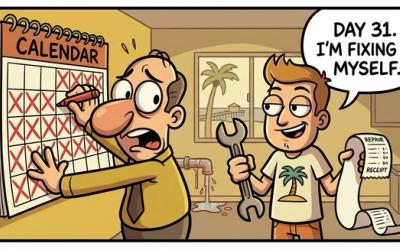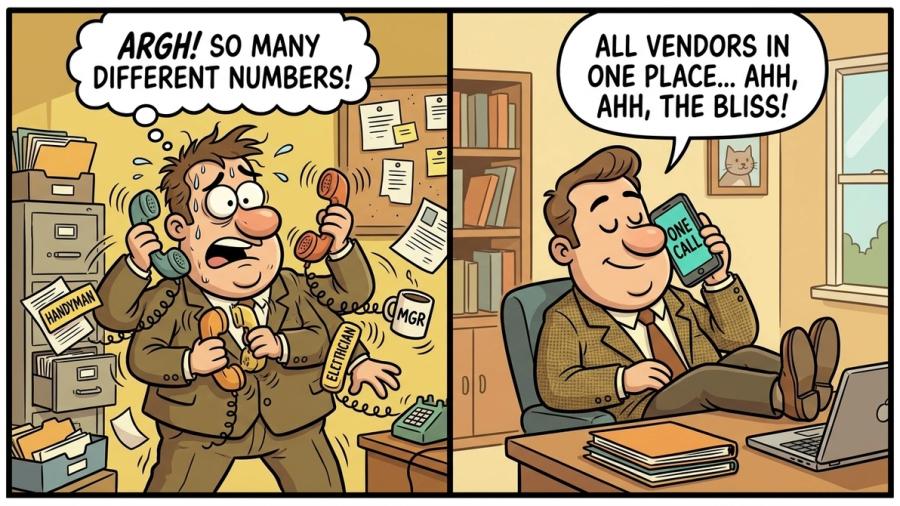
Most property managers didn't choose to work with five different maintenance contractors, it happened one hire at a time. A plumber for the plumbing, an electrician for the panel, an HVAC company for the units that still have window units, a handyman for everything in between. Each hire solved an immediate problem. None of them solved the coordination problem that shows up once all five are on the roster at once and each one needs to be scheduled, verified, and paid on its own separate track.
The coordination problem is specific: every additional vendor means another certificate of insurance to track, another license to verify, another invoice format, another point of contact, and another set of scheduling constraints to work around when three separate jobs need to happen in the same unit during the same week. None of that shows up on a single vendor's invoice, but it shows up somewhere, usually as hours a property manager didn't get back, or as a unit that sits half repaired because two different contractors are each waiting on the other to finish first.
What Actually Changes With One Vendor
Consolidating to a single multi trade vendor doesn't eliminate maintenance work, it eliminates the layer of coordination sitting on top of it. One number to call regardless of the trade involved. One licensing and insurance file instead of five. One invoice format instead of five different ones to reconcile against five different scopes of work. One scheduling relationship instead of five sets of availability to juggle when a unit needs plumbing, electrical, and drywall work in the same visit.
What to Actually Check Before Switching
A single vendor is only an improvement if it's a genuinely capable one, which means checking for licensing and insurance across every trade being consolidated, not just the primary one, confirming techs are background checked given they're working in occupied homes, and asking how pricing gets approved before work starts rather than showing up as a surprise on the invoice. It also means asking what happens when a job crosses trades, whether the same crew that fixes a leak can also patch the drywall it damaged, or whether that still becomes a second call to a second company. Nest Nomads was built to answer those questions directly for property managers, apartment communities, and landlords across Ventura County and the Sacramento region: one licensed and insured crew covering plumbing, electrical, HVAC, carpentry, drywall, painting, appliances, and turnovers, with pricing approved up front and every ticket closed out with photo documentation.
Five contractors on a roster isn't a strategy, it's an accumulation. The question worth asking isn't how many vendors a property manager has, it's how much of their week goes to managing the relationships between them instead of the properties themselves. For a portfolio of any real size, that answer usually reveals more room for improvement than the maintenance work itself ever did.