Water damage and freezing account for roughly a quarter of all homeowners insurance claims, according to Insurance Information Institute data, and the average payout runs well into five figures. For a landlord managing rental property, that makes an undetected leak one of the most expensive maintenance failures there is, and often the most preventable.
The Institute's figures put the average water damage and freezing claim somewhere between roughly $12,500 and $14,000 depending on the reporting period, with about one in every 60 to 67 insured homes filing a water related claim in a given year. Unlike wind or hail damage, which arrives suddenly and announces itself, water damage frequently builds quietly behind a wall, under a cabinet, or beneath a slab foundation before anyone notices it at all.
Why Leaks Go Undetected in Rental Units
Rental properties carry a specific version of this risk, whether the unit sits in Ventura County near the coast or further inland across the Sacramento region. A tenant might not think a slow drip under the kitchen sink is worth reporting, or a unit sits vacant between tenants with nobody around to notice a failing water heater at all. By the time the damage is visible, water has often already reached subflooring, drywall, or cabinetry, turning what could have been a small repair into a five figure restoration job with displaced tenants and a lengthy insurance claim attached.
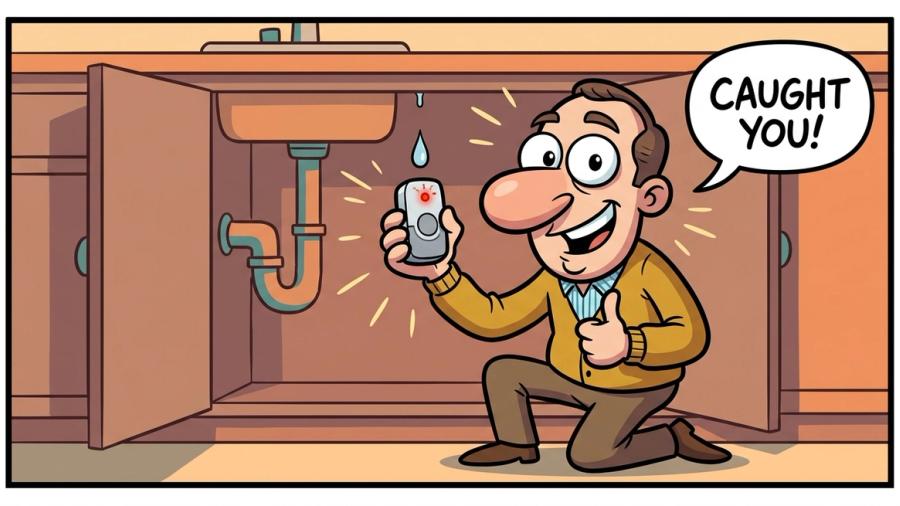
This is why smart leak sensors have moved from a nice to have into a standard part of preventive maintenance for landlords with any real portfolio. Placed under sinks, near water heaters, and in laundry areas, these devices send an alert the moment moisture is detected, often well before a tenant would notice anything themselves. Some systems pair with an automatic shutoff valve, cutting the water supply the instant a leak is flagged rather than waiting for a technician to arrive on site.
Building Leak Detection Into Routine Maintenance
Nest Nomads treats leak monitoring as part of the same coordination work that covers HVAC checks, appliance servicing, and seasonal inspections, not a separate add-on bolted onto the maintenance plan. Catching a slow leak during a routine visit, or getting an automated alert the moment one starts, is the difference between a plumber's invoice and a full restoration project that pulls a unit out of service for weeks while contractors dry out and rebuild.
Given how much of the annual claims total traces back to leaks nobody caught in time, a quick check under every sink is one of the cheapest insurance policies a landlord can put in place. That kind of upkeep costs almost nothing next to a five-figure restoration bill, and it rarely takes more than a few minutes during a visit a maintenance crew is already making for something else. For an owner managing several units across different neighborhoods, that small habit adds up to a meaningfully smaller claims history over time.