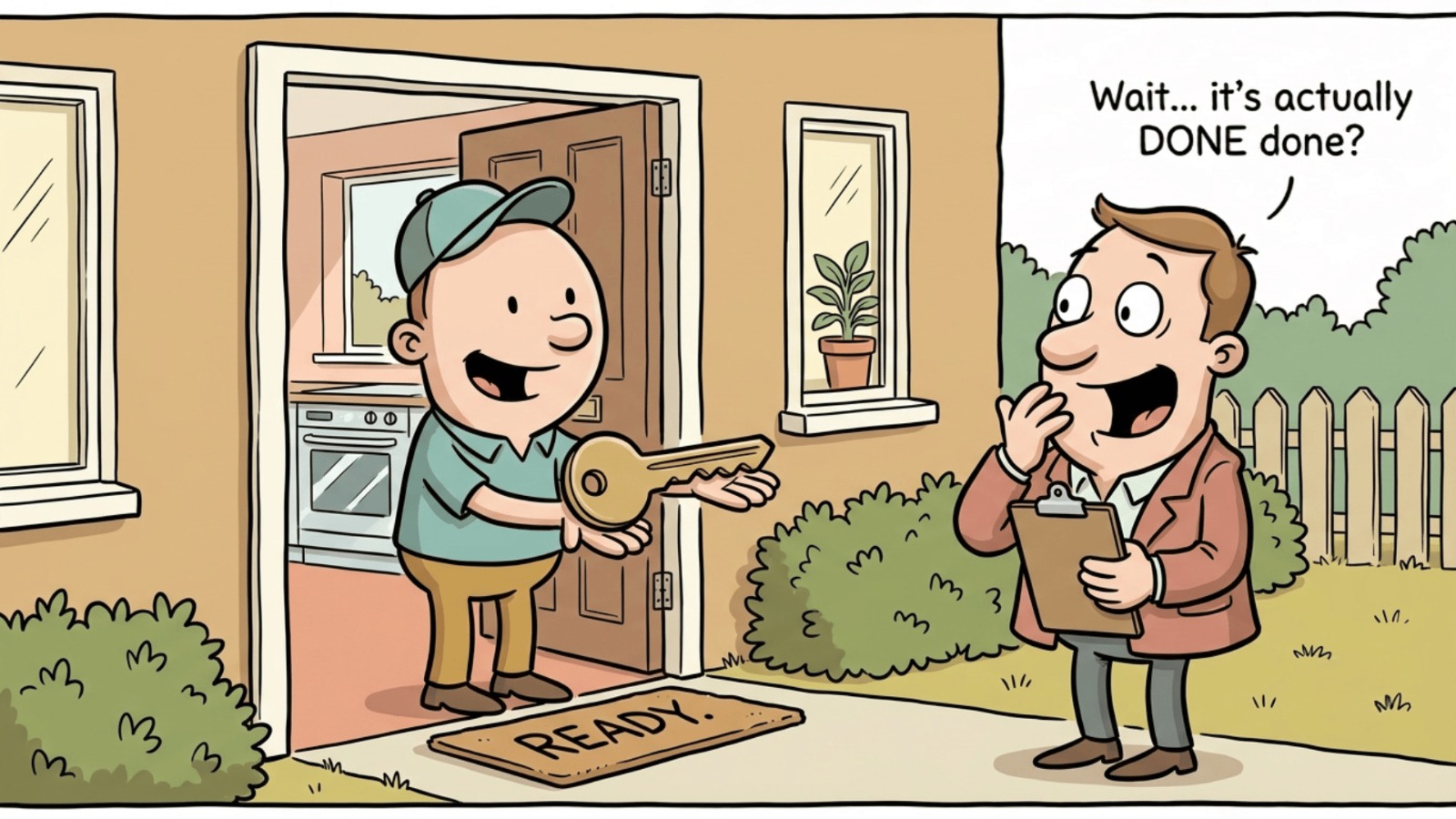
"Turnkey" Gets Thrown Around a Lot. Here's What It Should Actually Mean.
In property management, the word "turnkey" gets attached to everything from a fresh coat of paint to a full gut renovation. For an owner or manager, that ambiguity is expensive. If a vendor's idea of turnkey stops at cosmetic touch-ups while yours includes working appliances and code-compliant electrical, the gap shows up at move-in, not before.
A true turnkey service means a property is fully rent-ready or sale-ready the moment the vendor walks off site, no follow-up punch list required.
What a Genuine Turnkey Scope Covers
A property that is actually turnkey has been checked and completed across every system, not just the visible ones:
Structural and safety
roofing, foundation issues, smoke and CO detectors, GFCI outlets
Systems
plumbing, electrical, HVAC tested and functional
Interior finish
paint, flooring, drywall repairs, fixtures
Appliances
installed, tested, and working
Exterior
landscaping, exterior paint or siding touch-up, functional locks and entry points
Final walkthrough
a documented punch list confirming every item is closed out, not just started
If any one of these is skipped, the property is not turnkey, it is partially turned, and the gap gets discovered by whoever moves in next.
Why the Definition Matters More Than the Word
Owners and managers who work with multiple vendors across a portfolio often find that "turnkey" means something different from company to company. That inconsistency creates two problems:
Re-inspection costs
someone has to catch what the first vendor missed
Vacancy loss
every day spent re-opening a unit for follow-up work is a day it isn't earning rent
A vendor who defines turnkey the same way every time, and backs it with photo documentation and a signed punch list, removes the guesswork. The property is either ready or it isn't, and there's a paper trail either way.
What to Ask a Vendor Before You Call It Turnkey
Before accepting a property as turnkey-complete, it's worth confirming:
Was every system tested, not just visually inspected?
Is there a documented, signed-off punch list?
Were photos taken at completion, not just at the start?
Does the scope match what was quoted, or were items dropped along the way?
A vendor who can answer all four without hesitation is doing turnkey work. A vendor who can't is doing a partial turn and calling it something bigger.