California landlords now carry a clear legal duty to remove smoke, ash, mold, and other disaster related hazards from a rental unit before a tenant can be expected to move back in. Senate Bill 610, signed in October 2025 and effective January 1, 2026, closes a gap that left tenants and landlords arguing over cleanup responsibility after recent wildfires. The law applies statewide, covering wildfires, floods, earthquakes, and any other event tied to a declared state of emergency, not just the fire corridors of Southern California.
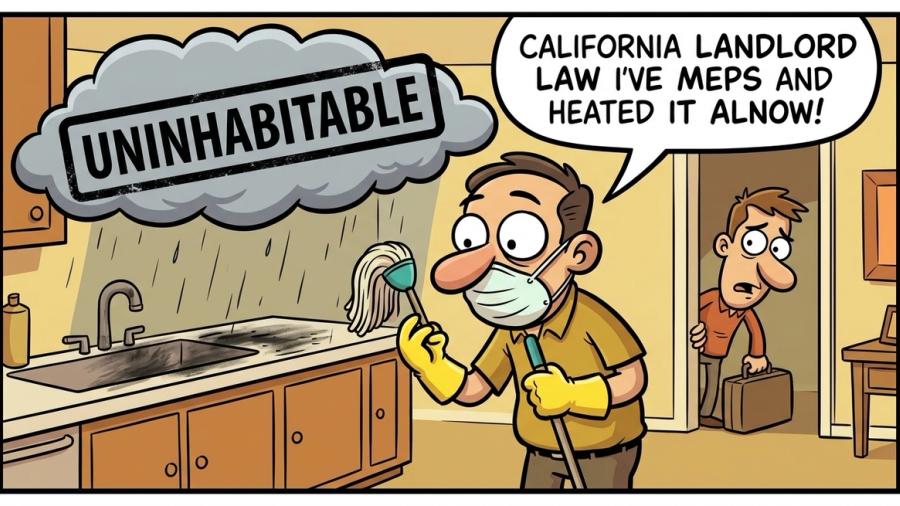
Its core mechanism is a presumption. If disaster debris, including ash, sludge, or runoff, is present at a rental property, the unit is presumed uninhabitable until a local public health agency confirms the debris isn't toxic. That presumption shifts the burden onto the landlord to prove a unit is safe, rather than leaving tenants to prove that it isn't. Rent obligations pause during any mandatory evacuation, and prepaid rent must be returned within 10 calendar days if the unit can't be occupied.
The Cleanup List Is Specific
SB 610 names the hazards a landlord has to address: mold, smoke, smoke residue, smoke odor, ash, asbestos, and water damage. Airing out a unit or running a surface level cleaning pass doesn't clear that bar if any of those conditions remain. The law expects licensed remediation contractors and the cleanup protocols set by government officials, and once the work is done, the landlord must notify the tenant in writing and make environmental testing and reports available on request.
Tenants Get Their Unit Back at the Old Rent
Once a unit is remediated, the tenant has the right to return at the same rent they were paying before the disaster, not a new market rate. A landlord isn't required to rebuild a unit that has been destroyed, but if it can be restored, the law expects the original tenant back in it rather than a re listed vacancy.
Ventura County and the Sacramento region both carry real exposure here, Ventura to wildfire, Sacramento to seasonal flooding along its rivers and levees, and either scenario can trigger SB 610's obligations. For the specialized hazard cleanup itself, the law expects a licensed environmental remediation contractor, but the repair work that follows, water damage, drywall, paint, is squarely in Nest Nomads' lane across both service areas, with a 24/7 emergency line answered by a real person and background checked techs typically dispatched within two hours. Every ticket closes with before and after photos and an invoice, the same kind of record SB 610 expects a landlord to produce once a unit is cleared.
SB 610 turns what used to be a gray area into a defined legal duty. Landlords who treat remediation planning as routine maintenance prep, rather than a scramble after the fact, are the ones who get tenants back into their homes fastest and avoid the rent abatement exposure that comes with a slow response, along with the reputational cost of a dispute that plays out in public.