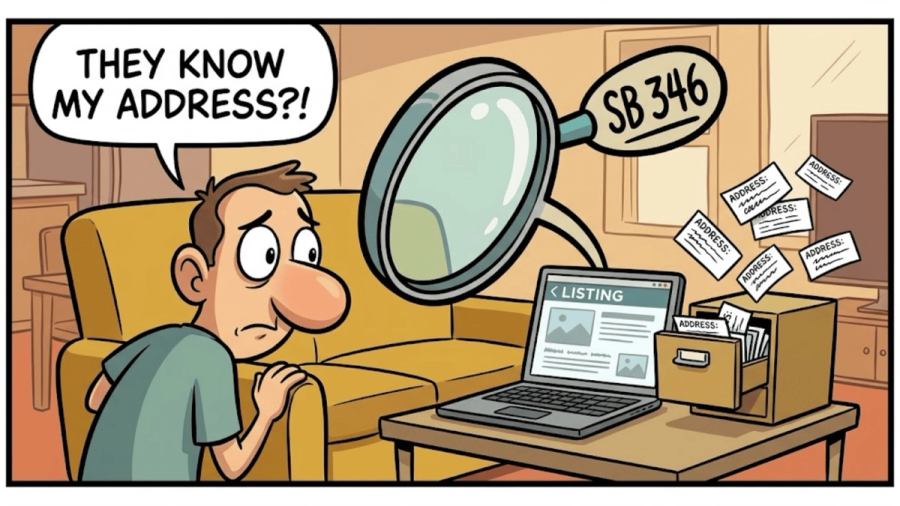
California cities can now compel Airbnb, Vrbo and Booking.com to hand over host data within 15 days of a formal request, under Senate Bill 346, which took effect on January 1, 2026. The law, formally called the Short Term Rental Facilitator Act, closes a gap that cities have complained about for years: platforms held the data on who was actually running a short term rental, and cities had almost no direct way to get it. Short term rental compliance in California has always been fragmented, decided city by city, but SB 346 hands every jurisdiction the same enforcement tool if they choose to use it.
Once a city adopts a qualifying ordinance, platforms must supply physical addresses, nine digit zip codes, assessor parcel numbers, listing URLs and booking volume for every short term rental within their limits. Platforms that refuse face fines of up to $10,000 a day. The bill passed the Assembly by a 64-0 vote, a level of agreement rarely seen on rental policy, and the League of California Cities has already called it the missing piece in local tax and licensing enforcement. Santa Monica filed an $18 million lawsuit the same month the law took effect, targeting operators who had converted more than two dozen rent controlled apartments into illegal listings.
What SB 346 Actually Changes for Hosts
For hosts who already hold a valid permit and file transient occupancy tax on time, SB 346 changes very little day to day. The shift is aimed at the portion of the market operating without a permit, exceeding a city's night cap, or running a listing in a zone where short term rentals aren't allowed at all. Roughly four months after the law took effect, most California cities still hadn't adopted the local ordinance needed to activate it, since SB 346 is an enabling law rather than a self executing one. Cities that already had enforcement infrastructure in place, among them Los Angeles, San Francisco and Santa Monica, moved first.
Platforms are also barred from telling a host when their data has been requested, so a host who has drifted out of compliance may not find out until a listing disappears or a citation arrives. Cities can require quarterly reports at minimum, or monthly ones if that matches the local transient occupancy tax filing schedule. For hosts managing a single property casually, keeping permit and tax paperwork current now carries more weight than it used to.
Why This Matters for Working Vacation Rental Hosts
For hosts who treat their vacation rental as a working property rather than a side project, SB 346 rewards groundwork that was already good practice: a current permit and an accurate tax filing history. Nest Nomads coordinates property maintenance and field services for vacation rental hosts across California, and the properties that weather a shift like this are almost always the ones where permit renewals and paperwork were never left to chance.
SB 346 doesn't change what a compliant host has to do. It changes how quickly a city finds out when someone hasn't.