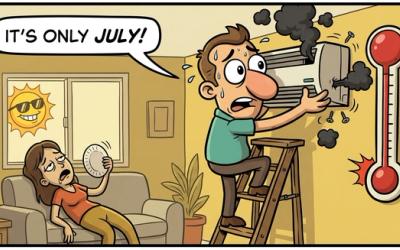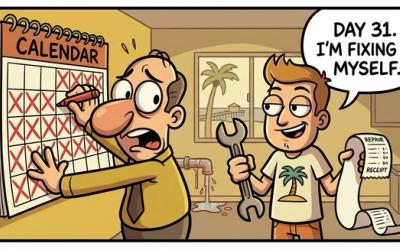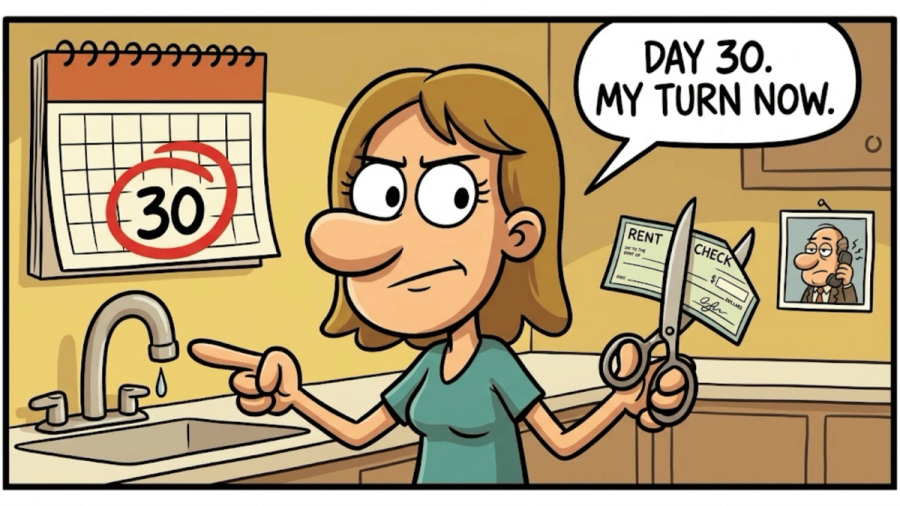
California tenants can legally deduct up to one month's rent to fix a habitability problem themselves under Civil Code Section 1942, and they can use that remedy twice in any 12 month period. The law gives landlords a defined window to act before that self help option becomes available, and that window is shorter than most maintenance schedules assume.
The statute requires written or oral notice to the landlord first, and Section 1942(b) presumes that 30 days is a reasonable amount of time to wait unless the circumstances call for faster action. That presumption is rebuttable in both directions: a tenant without heat or water can act well before day 30, while a landlord who shows genuine ongoing effort on a complex repair may have grounds to argue the 30 day mark alone wasn't unreasonable. Emergency conditions such as no heat, no water, gas leaks, or sewage backups are widely treated as needing action within 24 to 48 hours rather than waiting for the statutory presumption to apply.
Why the Response Clock Starts Immediately
For anyone managing maintenance requests, the 30 day marker isn't a deadline to work toward. It's the point at which a tenant's self help remedy becomes available, which means the effective deadline for meaningful action sits well before that. A request logged and then left untouched for three weeks gives a tenant a solid legal basis to bring in their own contractor, pay for the repair, and subtract the cost from next month's rent without further warning.
The exposure compounds from there. Beyond the deducted rent itself, an unresolved habitability issue can support a rent withholding defense if a landlord later tries to evict for nonpayment, and it can surface in a broader habitability dispute regardless of whether the tenant ever formally invokes Section 1942. Documentation works both ways here: a written log showing when a request came in, when a vendor was dispatched, and when the work was completed is the clearest evidence a landlord has if a deduction or a habitability claim is later challenged.
Building a Response System Around the Legal Clock
Coordinating maintenance across occupied units in Ventura County and Sacramento means treating every incoming request as a timed event from the moment it lands, not from whenever a vendor happens to be free. Categorising requests by severity at intake, tracking acknowledgment separately from completion, and keeping a written record of each step gives a portfolio a defensible timeline no matter which way a dispute goes. It also surfaces the requests quietly aging toward the 30 day mark before a tenant has to escalate to force the issue.
The repair and deduct remedy exists because the alternative, an indefinitely ignored repair, creates worse outcomes for everyone involved. A maintenance system built around that 30 day marker rather than caught out by it turns a legal deadline into a routine operational one.