California’s AB 1572 bans using drinking water to irrigate nonfunctional turf, and the phase in starts on January 1, 2027 with state and local government properties. Commercial, industrial and institutional properties follow on January 1, 2028, and the common areas of homeowners associations and similar communities on January 1, 2029. Single family residential properties are excluded, and Casitas Municipal Water District in western Ventura County says multifamily residential properties are too.
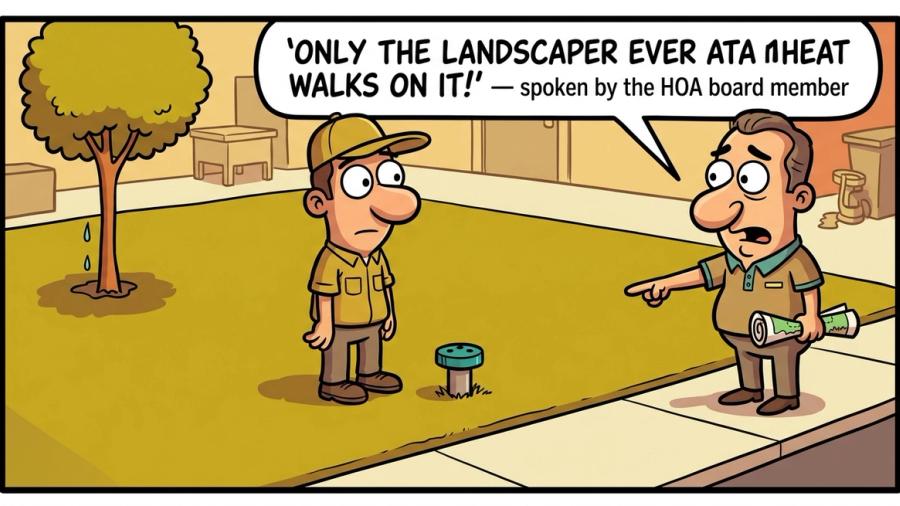
Nonfunctional turf is irrigated lawn that is ornamental and not regularly used for recreation or public gatherings. Typical examples are decorative lawn along sidewalks, building edges and fences, and grass in medians, parking lots, entry signage areas and on slopes. One test water districts offer is simple: if the only person who walks on the lawn is the landscaper, it is probably nonfunctional. Trees and perennial plantings can still receive drinking water, as can turf irrigated with recycled water, and exceptions exist for immediate health and safety needs.
Who has to comply, and who enforces it?
The law applies statewide, including the Sacramento region, but each water supplier writes its own local rules. Casitas adopted its ordinance on July 8, 2026, and the City of Ventura has been preparing outreach for customers. Suppliers are not required to enforce the ban, though they may, and the State Water Resources Control Board can extend a compliance deadline by up to three years for economic hardship, critical business needs or public health and safety concerns. Commercial, industrial and institutional owners with more than 5,000 square feet of irrigated area must certify compliance to the state starting June 30, 2030, and HOA type properties with more than 5,000 square feet of irrigated common area starting June 30, 2031, in both cases every three years after that.
Property managers should sort their portfolios by these dates. Public properties come first, commercial sites a year later, and HOA common areas last. A managed commercial strip or an HOA entrance is squarely inside the ban. Apartment communities are less clear, because not every supplier describes multifamily properties the same way, so it is worth asking the water supplier how each irrigation meter is classified.
What should maintenance teams do before the deadline?
Start with a map. Walk each covered property and mark every irrigated lawn area as functional, such as a play area or a lawn people use, or nonfunctional. Owners are not required to replace the lawn by the compliance dates, only to stop irrigating it with drinking water, so the first step is often as simple as shutting off zones.
Then look at the irrigation itself. Trees growing in turf areas still need water. Some water suppliers allow a zone that shares trees and turf to keep running, but most recommend giving trees their own watering plan, with sprinkler heads adjusted to the canopy or converted to bubblers or drip. Controllers should be reprogrammed and checked, since a zone left running by mistake after a deadline would defeat the point. Photos of capped heads, shutoffs and controller settings give an owner or board a record that the work was done.
Nest Nomads handles lawn care and routine maintenance for properties across Ventura County and the Sacramento region, with before and after photos of every closed ticket.