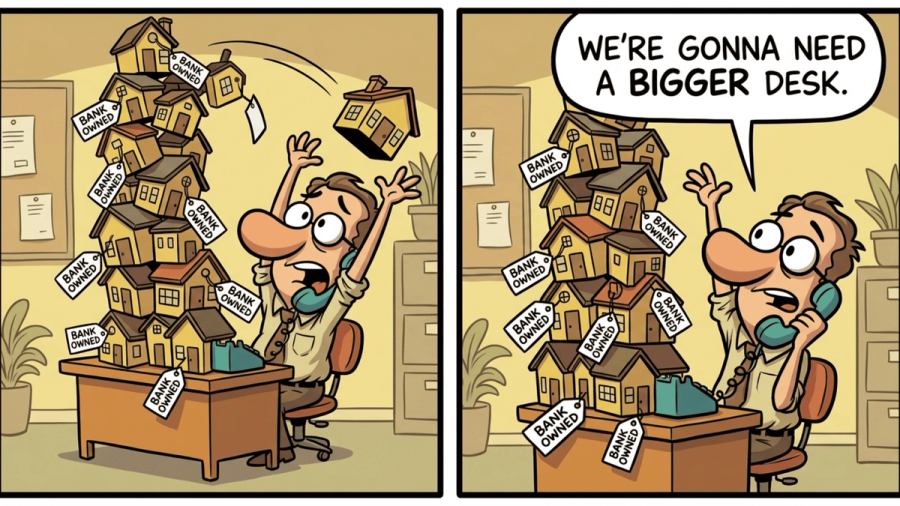
Completed foreclosures, the point at which a home becomes a bank-owned REO property, rose 33 percent in the first half of 2026 compared with the same period last year, according to ATTOM's mid-year U.S. Foreclosure Market Report. It's the twelfth straight month of annual increases in foreclosure activity overall.
Nationwide, 227,548 properties received a foreclosure filing in the first six months of 2026, up 21 percent year over year and 28 percent compared with 2024, while foreclosure starts climbed 18 percent. The average timeline from filing to completed foreclosure fell to 563 days, the shortest since 2013. Florida, South Carolina, and Indiana posted the highest foreclosure rates among states this year, while Texas, Michigan, Florida, and California led the country in raw REO counts earlier in the year.
Rising Costs, Not a Crash, Behind the Numbers
Unlike the last housing downturn, this rise isn't tied to job losses or risky lending. Rising property taxes, insurance premiums, and association fees are pushing monthly housing costs past what many homeowners budgeted for, and the growing volume is stretching servicer capacity across loss mitigation, borrower communication, document processing, and vendor oversight, according to BlackWolf Advisory Group founder Mirza Hodzic.
Most analysts describe the growth as steady rather than explosive. A large share of homeowners in foreclosure still carry enough equity to sell before the process completes, acting as a buffer against the kind of REO flood seen in the last crisis, and lenders are managing releases more deliberately than in past cycles, spreading inventory across markets rather than letting it concentrate all at once. Rather than moving large batches of REO inventory at once, many lenders are staggering sales and listing more properties directly instead of through bulk portfolio transactions, a shift that spreads out both pricing pressure and the volume of preservation work tied to any single quarter.
Why Preservation Work Follows REO Property Growth
Every REO property that lands on a lender's books needs regular upkeep to avoid becoming a liability instead of an asset. That includes securing the property against vandalism and squatters, winterizing plumbing and HVAC systems in vacant units, cutting back overgrown landscaping, and documenting condition for broker price opinions. Property preservation and REO management work scale directly with the number of properties moving through the pipeline, and that pipeline has been getting longer for a year straight. Servicers managing that pipeline across multiple states increasingly need vendors who can turn around inspections and preservation orders quickly and consistently, since a delayed preservation visit on a vacant property can turn a minor issue, a leak or a break-in, into a much larger repair bill by the time anyone notices.
How long the growth continues depends largely on how much equity cushion remains in the market. For now, the volume of REO property entering the system keeps climbing, and the preservation work tied to it is climbing right along with it. Portfolios that build reliable preservation capacity now, rather than scrambling later, will be in a stronger position if foreclosure completions keep accelerating through the back half of the year.