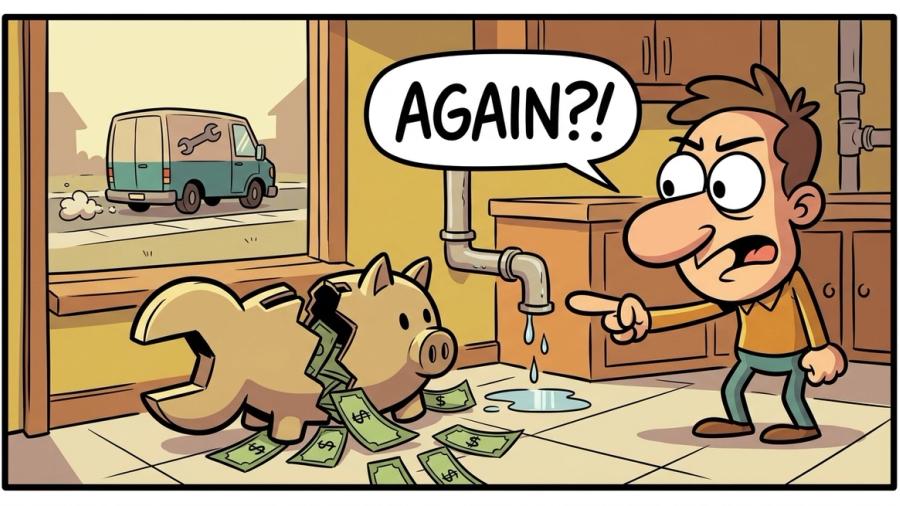
A maintenance callback costs more than the second visit. According to research from the Aberdeen Group, the average first time fix rate across field service industries sits at around 75%, meaning roughly one in four service calls requires the technician to come back. Each of those repeat visits carries a real price tag: Aberdeen's research puts the cost of an additional dispatch at $200 to $300, and a failed first visit typically takes another 1.6 visits on average to fully resolve.
For a property manager, that math compounds fast. A callback isn't just a line item cost, it's a resident who took time off work for a technician who didn't fix the problem, a unit that stays on the maintenance list instead of closing out, and a property manager who has to explain the delay to an owner asking why the same repair shows up twice. Best in class field service organizations post first time fix rates closer to 89%, a gap that mostly comes down to two things: whether the right technician was dispatched for the job, and whether they arrived with the parts and information needed to actually finish it.
Why Multi Trade Vendors Have an Edge Here
A big share of failed first visits trace back to a mismatch between the job and the technician sent to do it, a plumber called out for what turns out to be a drainage issue tied to a broken disposal, an electrician who diagnoses a problem that actually needs a carpenter to fix the access panel first. A vendor with technicians trained across multiple trades is better positioned to catch that on the first visit instead of the second, because the person standing in the unit can recognize the actual scope of the problem rather than only the piece that matches their specialty, and can either fix it on the spot or flag the right follow up trade before leaving.
Fixing the Cause, Not Just the Symptom
The habit that actually moves a first time fix rate is diagnosing the root cause instead of patching the visible symptom: a leak traced back to a failing seal instead of just mopped up, a breaker that keeps tripping traced to the actual overloaded circuit instead of reset and left alone. Nest Nomads builds its process around that distinction for property managers, apartment communities, and landlords across Ventura County and the Sacramento region: technicians dispatched with the right trade for the job, pricing approved before the work starts, and every ticket closed out with before and after photos so there's a record of what was actually fixed.
A callback rate is really a measurement of how often the first visit was set up to succeed. The property managers with the fewest repeat visits usually aren't the ones with the fastest technicians, they're the ones whose vendor got the right person there the first time.