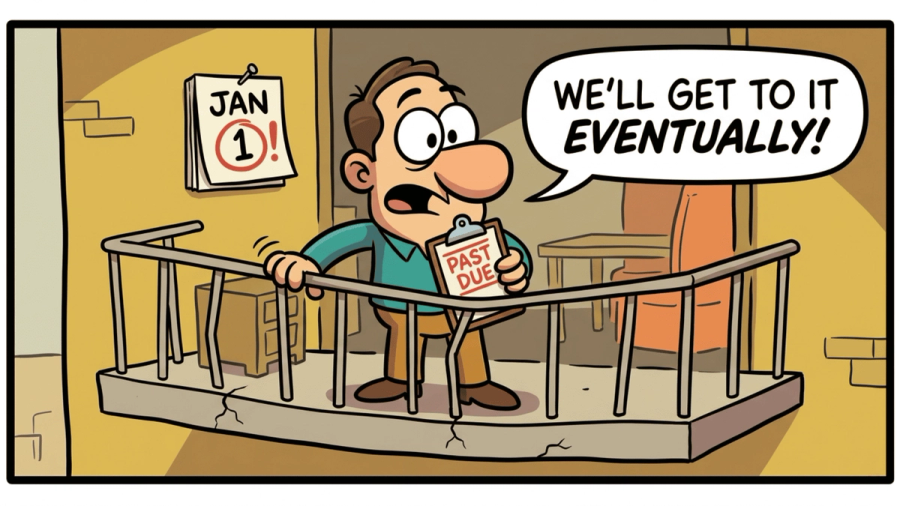
California condominium associations with three or more units, along with apartment building owners statewide, faced a January 1, 2026 deadline to complete their first mandatory property inspection of exterior elevated elements such as balconies, decks, walkways, and stairways. The requirement comes from two companion laws, SB 326 for condo HOAs and SB 721 for apartment buildings, and applies to any qualifying element more than six feet above ground that is substantially supported by wood.
Both laws trace back to the 2015 Berkeley balcony collapse that killed six people, and both require a licensed architect, structural engineer, civil engineer, or certified building inspector to examine a statistically significant sample of elements, typically at least 15 percent of all balconies and decks on a property. Inspectors assess waterproofing, load-bearing capacity, and remaining useful life, then file a formal report with the local building department, with any identified safety hazards required to be remediated within a set timeframe.
The Cost of Falling Behind
Properties that missed the deadline are already in violation. Local code enforcement in cities including Los Angeles and San Diego is ramping up audits, and the consequences extend beyond fines. Associations that fail to comply lose insurance liability protection for injuries connected to elevated elements, exposing the HOA to lawsuits, and board members can face personal liability for negligence if they failed to act on a known issue.
The financial range is wide. Routine inspections typically run several hundred to a few thousand dollars per building, but remediation once a problem is identified can run into the tens of thousands, with waterproofing repairs alone sometimes exceeding $10,000 per balcony. One Los Angeles HOA reportedly saved $60,000 by catching water damage early rather than waiting for a full failure, which is the outcome the inspection requirement is designed to catch before it happens. Demand for qualified inspectors has also been running high since the deadline approached, with many firms booked out for months, which means boards that wait even longer to schedule are likely to face a longer queue on top of the compliance exposure.
Building Property Inspection Into Ongoing Maintenance
The inspection itself is a compliance milestone, not the end of the obligation. Condo associations move to a nine-year reinspection cycle under SB 326, while apartment owners under SB 721 reinspect every six years, but the waterproofing membranes, railings, and structural connections covered by both laws still need monitoring in between. That routine upkeep, exterior maintenance, drywall and paint touch-ups, and carpentry repairs on railings and decking, fits naturally alongside the trades already working an occupied property rather than requiring a separate specialist call every time.
For HOA boards and apartment owners who haven't scheduled their first inspection, the deadline has already come and gone. The properties carrying the least risk going forward are the ones treating the report as the start of a maintenance routine rather than a box that got checked once.