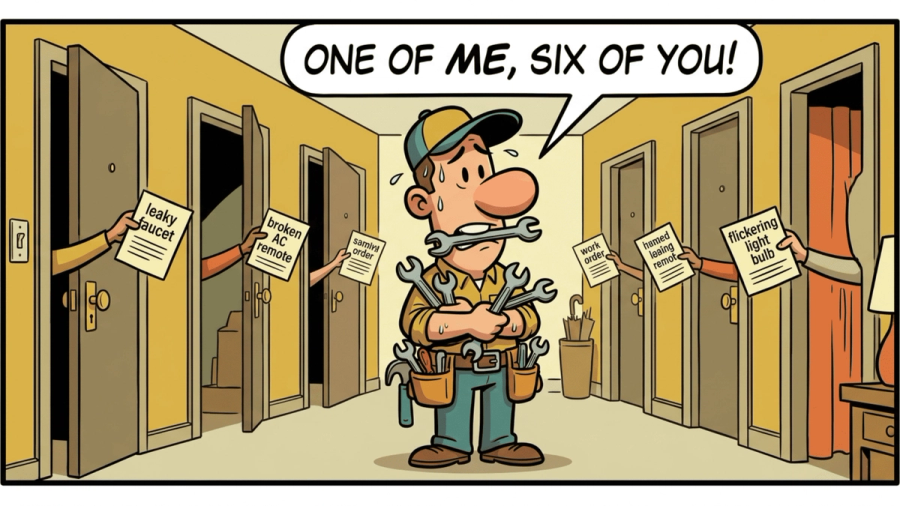
Maintenance technicians are now the hardest on-site position for apartment operators to fill in 2026, even as hiring pressure has eased for leasing consultants and other office roles. Property maintenance services teams remain understaffed across the industry, according to the National Apartment Association's latest Apartment Market Pulse survey.
Multifamily deliveries stayed elevated through the first half of the year even as new construction began to slow, leaving operators responsible for a growing inventory of communities that need experienced on-site teams. Maintenance technicians, service supervisors, and other skilled trades roles are competing against construction, hospitality, and other industries for the same limited pool of HVAC, electrical, plumbing, and general building maintenance talent, according to Greystar's managing director of people and culture, Merideth Reigel.
A Property Maintenance Services Pipeline That's Shrinking
Executives describe the shortage as a pipeline problem rather than a demand problem. Experienced technicians are retiring while fewer younger workers enter the skilled trades, creating a long-term gap between the people leaving the profession and the people entering it. CAPREIT's chief technology and transformation officer, Savas Karas, said the imbalance creates both a talent shortage and a knowledge deficit, and that the effect is sharper in smaller and rural markets where fewer qualified candidates are available in the first place.
Operators are responding with more than pay increases. Many have expanded technical training, certification support, and mentoring programs that pair newer hires with seasoned technicians, while building partnerships with trade schools and workforce development groups to introduce more people to maintenance careers. Technology, including AI-assisted workflow tools and centralized support, is also freeing existing teams to spend more time on resident service requests and less on administrative tasks, though executives are clear it is meant to support technicians rather than replace them. Some operators are also sharing technicians across nearby properties in the same market, a workaround that stretches a smaller bench further without asking any one team to absorb the whole gap.
What It Means for Property Maintenance Services on Occupied Units
For property managers, a thinner bench of qualified technicians shows up fastest in the places residents notice most: slower response times on repair requests, longer unit turns, and emergency calls that stretch overnight teams thin. That's where outside maintenance crews fill the gap without adding permanent headcount, covering everything from plumbing and electrical to turnovers and general repairs across a portfolio without operators needing to staff every trade in-house. A crew that already covers every trade under one roof also removes the coordination burden of managing several single-trade vendors at once, which matters most when an in-house team is already stretched thin.
Labor conditions may stabilize further, but few in the industry expect skilled trades recruiting to get meaningfully easier soon. Portfolios that build flexible capacity into their maintenance model now, whether through training pipelines or trusted outside crews, will be better positioned than those still trying to hire their way out of it.