California’s new plug in solar law lets residents run up to 1,200 watts of solar from a standard wall outlet without utility approval, and it takes effect January 1, 2027. SB 868 was signed on September 30, 2026. For rental owners, the notable part is what the bill leaves out: it says nothing about landlords, leases or tenants, so those questions fall back on the lease and the owner’s own rules.
A plug in system is a small photovoltaic setup that connects through a receptacle instead of being hardwired. The law caps output at 1,200 watts of AC power per dwelling and requires certification as a plug in solar system by UL or an equivalent testing lab. The device must also meet the National Electrical Code and California Electrical Code, and it must include a feature that isolates it from the building so it cannot feed power back into the grid during an outage. Utilities cannot require approval, an interconnection agreement or any fee, though they may ask customers to register the address, make, model and size through a simple online form.
What Does Plug In Solar Mean for a Rental Property?
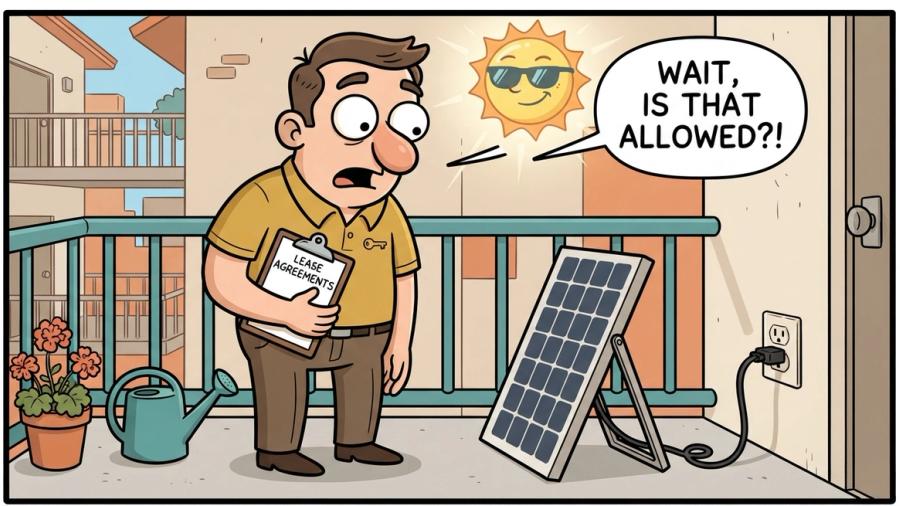
Plug in solar suits renters well, because there is no roof access, no installer and no hardwiring involved. That is also why requests will likely land on owners and managers rather than electricians. Since SB 868 does not address lease terms, a tenant’s right to plug in a device is set by the lease, not the statute. Owners who want a consistent answer across a portfolio should write down a position before the first request arrives: which outlets are allowed, who pays if an outlet or wiring is damaged, and whether the device comes out at move-out.
The electrical condition of the unit matters more than the panels. At 120 volts, 1,200 watts works out to about 10 amps, and the outlet it uses shares a circuit with whatever else is plugged in on that line. A loose receptacle, a scorched cover plate or a breaker that trips under load is a weak starting point for a device that may run for hours every sunny day. Balcony and patio outlets add moisture to the picture, so a GFCI that fails its test button or a cracked weatherproof cover deserves attention now.
What Should Owners Check Before January 1?
Start with the outlets tenants are most likely to use: balcony, patio, garage and any exterior receptacle. Test the GFCI protection, check covers and plates, and look for discoloration, looseness or plugs that run warm. Confirm which breaker feeds each outlet and label it clearly, because a panel directory that reads “misc” becomes a problem once a device is drawing power. Photograph each outlet with a date stamp so the unit has a baseline at move in and move out.
Mounting is a separate decision. Hanging panels from a railing or exterior wall adds weight and wind load to hardware that was never designed for it, so owners should decide whether any mounting is allowed and who approves it. Anything beyond replacing a worn receptacle or cover, such as adding a circuit, belongs with a licensed electrician.
Nest Nomads coordinates minor electrical, handyman and routine maintenance trades for rentals across Ventura County and the Sacramento region, with before and after photos on every closed ticket.