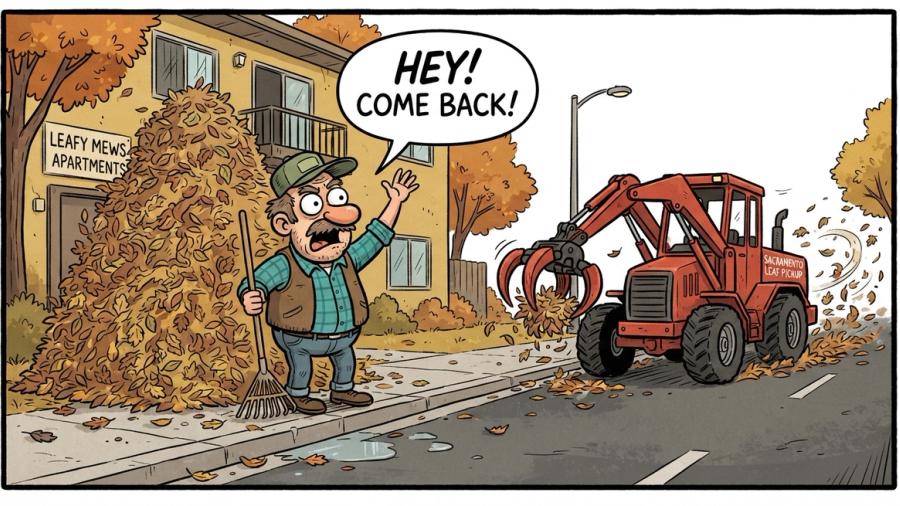
Sacramento’s leaf season began November 2, but the Claw only works for some rentals: apartment buildings with five or more units, commercial properties and homes on private streets do not get the service. The City runs the program through January, and it is the one stretch of the year when customers on eligible streets can legally pile yard waste in the road instead of a bin. For owners and managers of Sacramento rentals, the first job is working out which side of the line each property sits on.
Service goes to City solid waste customers on public streets that have a curb and gutter. A property outside that group can still see a collection calendar for its regular pickups, but a leaf pile in the street is not covered. The SacRecycle collection calendar and app give an estimated next pickup date by address and update daily, so a leaf schedule showing for an address confirms the property qualifies.
How Should Leaf Piles Be Set Up on a Rental Street?
Fill the organics container first. Weekly container pickup continues all season, and containers are emptied 13 times during leaf season while the Claw makes about seven passes, so the bin is the faster route. Excess goes in a pile of no more than five cubic yards, roughly 4 by 4 by 9 feet, with limbs cut to three feet or shorter and no thicker than four inches. Keep the pile six feet from cars, boats and basketball hoops, leave a gap between the pile and the curb so water can reach the storm drain, and stay out of bike lanes where possible.
Only plant material belongs in the pile. Food waste goes in the organics container, pet waste goes in the garbage, and nothing should be bagged in plastic. Holiday trees are accepted once the decorations come off. Timing matters as well: in past seasons the City has treated piles put out before the season or after the final collection as illegal dumping, which can draw a code enforcement tag. Storms slow crews because wet leaves are heavier, and a few large leaves are enough to clog a storm drain, so a pile that sits through a rain can turn into a drainage problem.
What Should Owners Do Where the Claw Does Not Go?
Properties outside the program need their own plan. The City has pointed ineligible properties toward landscaping services and commercial haulers for excess debris, which means leaf removal belongs on the vendor schedule instead of being left to chance. A visit every few weeks through January keeps leaves from collecting against fences, across parking areas and around drains.
The lease is the other half of the plan. If tenants maintain the yard, spell out whether that includes raking and how the leaves leave the property, since piling them at a curb that gets no service creates a violation. Gutters, downspouts and yard drains fill with the same leaves, so a cleaning pass fits on the same list. A dated photo of the yard at each visit documents its condition before and after a storm.
Nest Nomads coordinates lawn care, handyman and routine maintenance trades for rentals across Ventura County and the Sacramento region, with before-and-after photos on every closed ticket.